2024
Real Dictators Podcast November 2024
Real Dictators is the award-winning podcast on BBC Sounds, which ranks among the top history podcasts globally, exploring the hidden lives of history’s tyrants. The podcast is hosted by Paul McGann, with contributions from eyewitnesses and expert historians. Professor Micheál Ó Siochrú was a guest in November 2024, on a podcast devoted to the life and career of Oliver Cromwell, focusing on the conquest of Ireland, and the subsequent land settlement and exploitation of the country in the interest of the emerging English Atlantic Empire.
European Association for Banking and Financial History – Budapest, June 2024

The European Association for Banking and Financial History brings together bankers, archivists, supervisors and scholars to preserve financial records and deepen understanding of banking and finance. The association encourages the proper preservation of historically relevant material and the circulation of high level historical research. At their conference in Budapest in June, Dr David Brown demonstrated how linked AI tools can transform archival research for financial history. Drawing on the Empire project, he stressed the strong financial history running through imperial records, and how AI can make vast financial and imperial collections newly searchable and usable at scale.
Transkribus User Conference – Innsbruck, Austria, February 2024
READ-COOP’s Transkribus platform, developed from the European READ project, uses AI-powered text recognition to turn handwritten and printed historical documents into searchable text across many languages and scripts. At the 2024 Transkribus User Conference, held in Innsbruck in February, Dr David Brown examined how large language models can both help and mislead historical researchers. arguing that LLMs are unreliable as stand-alone research tools, but powerful when connected to verified sources. Dr Brown demonstrated how Transkribus transcriptions can be structured, referenced, and uploaded to LLMs to support more accountable historical analysis within modern digital history and archival workflows.
Book chapter by dr.David Brown: ‘The Atlantic Correspondence of the Royal African Company, 1678–1681’, 15 January 2024
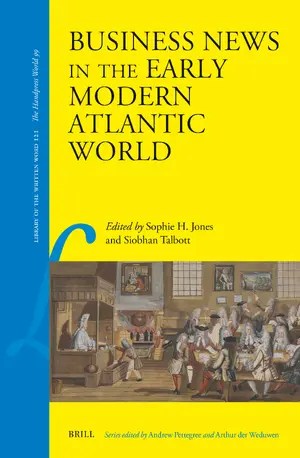
The Empire project’s David Brown has contributed a chapter to an edited collection by Sophie Jones and Siobhan Talbott, Business News in the Early Modern Atlantic World (Brill, Leiden). Entitled ‘The Atlantic Correspondence of the Royal African Company, 1678–1681’, the chapter demonstrates that the RAC was far less coherent and centrally controlled than its London records suggest. Its letters from West Africa, the Caribbean, Virginia, and company ships reveal a fragmented imperial organisation marked by disease, fraud, weak oversight, interloping, local bargaining, and competing commercial interests. In Africa, the correspondence exposes fragile factories, high mortality, dependence on African polities, and uneven approaches to trade and enslavement. In the Caribbean, especially Barbados, Jamaica, and Nevis, RAC agents used courts, debt, monopoly claims, and royal influence to secure enslaved labour while struggling with illicit trade. The chapter argues that these letters formed a privileged intelligence network linking Atlantic outposts to London and Charles II, while also exposing the archival silence surrounding the enslaved.

