The Empire Project
The EMPIRE project, funded by a Research Ireland senior laureate award, will explore Ireland’s crucial role in England’s (and later Britain’s) global expansion. The mid-eighteenth century witnessed Britain’s emergence as the foremost power in the Western World, enjoying unparalleled wealth, influence, and geographical reach. But how did it obtain such an exalted position and more specifically, what were the processes that facilitated such a dramatic rise to prominence? This question lies at the heart of the EMPIRE project. Challenging the dominant, Anglo-centric narrative, this project takes a radically different approach, investigating how from the mid-seventeenth century, Ireland provided England with a decisive advantage over its continental rivals on the world stage. Irish historiography focuses primarily on the Irish diaspora in the emerging English Atlantic Empire, but EMPIRE will instead turn the spotlight on the country, rather than its people, as the significant source of finance and resources driving England’s expansion overseas and its global dominance thereafter.
To test this hypothesis, the EMPIRE project will integrate traditional historical scholarship with an innovative Digital Humanities strategy to enable a detailed study of the intricate workings of the English government in Ireland. The project will provide access to large volumes of newly recovered records, available for the first time in over a century, since a devastating fire destroyed the original collections in Public Records Office of Ireland in 1922. Collectively, these sources represent by far the most complete record still extant of early modern English colonial administration and finance in the Atlantic World. The project will develop a novel historical methodology, using artificial intelligence to create a digital knowledge base from these newly identified records, exploiting new technologies to extract information from large amounts of raw text and data. This frontier research, therefore, will transform our understanding of the emergence and consolidation of England’s Atlantic Empire from the mid-seventeenth century.
Project Team
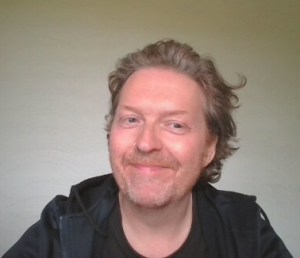
Micheál Ó Siochrú is Professor in Modern History at Trinity College Dublin. His primary research focus is on seventeenth-century Irish political, constitutional, urban and military history, from the Ulster Plantation to the Jacobite Wars, situated within a broader European and imperial contextual framework.
Research outputs divide neatly into two distinct, though overlapping, areas:
The first of these has involved the publication of important single-authored works with leading international presses and journals. This includes the monographs God’s Executioner: Oliver Cromwell and the conquest of Ireland (London, 2009), and Confederate Ireland, 1642-1649: A constitutional and political analysis (Dublin, 2008, 2nd edition), alongside the recent publication of a chapter in the three-volume Cambridge World History of Genocide (Cambridge, 2023), which marked the culmination of twenty years of research on the nature of the English conquest of Ireland.
The second phase has involved a series of major international collaborative projects to produce critical editions online and in print of key archival material by exploiting/developing the latest computer technology. These include the 1641 Depositions, the Down Survey of Ireland and most recently the letters, papers, and writings of Oliver Cromwell in three volumes for Oxford University Press (Oxford, 2022) . All these projects have attracted considerable competitive funding and resulted in a diversity of outputs, both for academic and public audiences.
Empire Project – Research Ireland Advanced Laureate Award: In 2023 Professor Ó Siochrú was one of only four scholars nationally in the Arts and Humanities to receive an Irish Research Council (Research Ireland) Advanced Laureate award for the project entitled ‘Empire: Cromwellian Ireland and the Transformation of the English Atlantic World’.
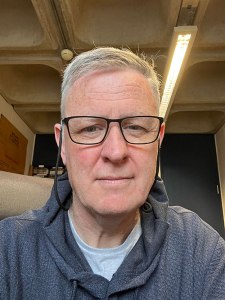
David Brown is Senior Research Fellow for the Empire Project at Trinity College Dublin. In recent years, he has played a leading role in the delivery of major digital humanities initiatives, including the Down Survey of Ireland (2013) and the Virtual Record Treasury of Ireland (2022). As part of the latter project, he oversaw the integration of digitised records from more than seventy archives worldwide, helping to reconstruct the documentary remains of Ireland’s destroyed Public Record Office.
He is the author of Empire and Enterprise: Money, Power and the Adventurers for Irish Land during the British Civil Wars (Manchester University Press, 2020), a study of merchants, finance, and colonial expansion in the early modern Atlantic world. He has also published numerous book chapters and journal articles on Ireland’s place within the wider Atlantic economy, with particular attention to trade, empire, land settlement, and state formation in the seventeenth century.
His current research combines traditional archival scholarship with computational methods, including historical GIS, large-scale text analysis, machine learning, and AI-assisted workflows. He is especially interested in how new digital tools can recover, connect, and reinterpret dispersed historical records, and in how Ireland’s early modern history can be understood within broader imperial, European, and Atlantic contexts.
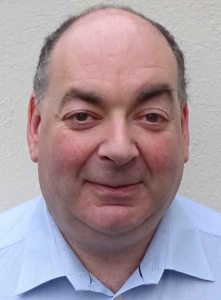
Gerard Farrell is a Postdoctoral Fellow at the Department of History. He has a broad field of interests related to seventeenth-century Ireland and colonialism more generally, particularly its impact on indigenous populations. Having graduated with a BA in History and English in 2011, he received his PhD in History from Trinity College in 2015. He is the author of The ‘Mere Irish’ and the Colonisation of Ulster, 1570-1641 (2017), an in-depth study of the impact on the native Irish population of the plantations in Ulster. Following his PhD, he was the Royal Irish Academy’s RJ Hunter postdoctural fellow from 2016 to 2018. His interest in early-modern colonialism extends to other areas of the Atlantic world, particularly North America and the indigenous people of the eastern seaboard as the met the challenges of conquest and colonisation in the seventeenth century, a subject on which he taught a course at Trinity College in the Spring of 2018.
Beyond the early-modern period, he has an interest in the transmission of historical evidence more broadly, and is a qualified archivist, having completed a masters in Archival Science at Uppsala University in 2019-2021, producing a thesis: ‘The Vienna Convention of 1983: context, failure and aftermath’. He is also an Irish-language enthusiast, with a particular interest in the evolution of Irish literature since the early-modern period, and in 2023 produced the first Transkribus model for automated transcription of seanchló/cló Gaelach, or Gaelic type.