EMPIRE NEWS
Latest news
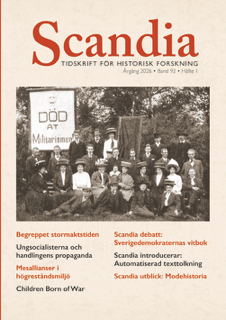
June 2026: Article by Dr. GERARD FARRELL IN SCANDIA, THE SWEDISH JOURNAL FOR HISTORICAL RESEARCH
This article (in Swedish) describes a pilot study undertaken as part of the EMPIRE project, in which records from the Swedish National Archives concerning the colony of New Sweden (1638–1655) were transcribed, translated, and summarised using Handwritten Text Recognition (HTR) via Transkribus and the Large Language Model (LLM) ChatGPT. The aim was to test how effectively these tools could be used to process this extensive material (over 130 folio pages) with documents in Swedish, German, Dutch, and Latin. The article explains the choice of HTR models, particularly how a combination of Transkribus and transformer-based models such as ”Text Titan I” and ”Swedish Lion I” were used to optimise speed and reach a level of acceptable accuracy.
An important aspect was to assess the ability of LLMs to summarise and translate fragmentary and partially illegible texts, as well as to weigh accuracy against efficiency. The article also presents an example from a 1643 court case between Governor Johan Printz and the English merchant George Lamberton, demonstrating the method’s potential for interpreting complex sources. Finally, the author discusses the future potential of this technology and possible avenues for further development, emphasising that although the technology requires human oversight, it is a powerful labour-saving tool that can transform how historical material is made accessible and analysed.
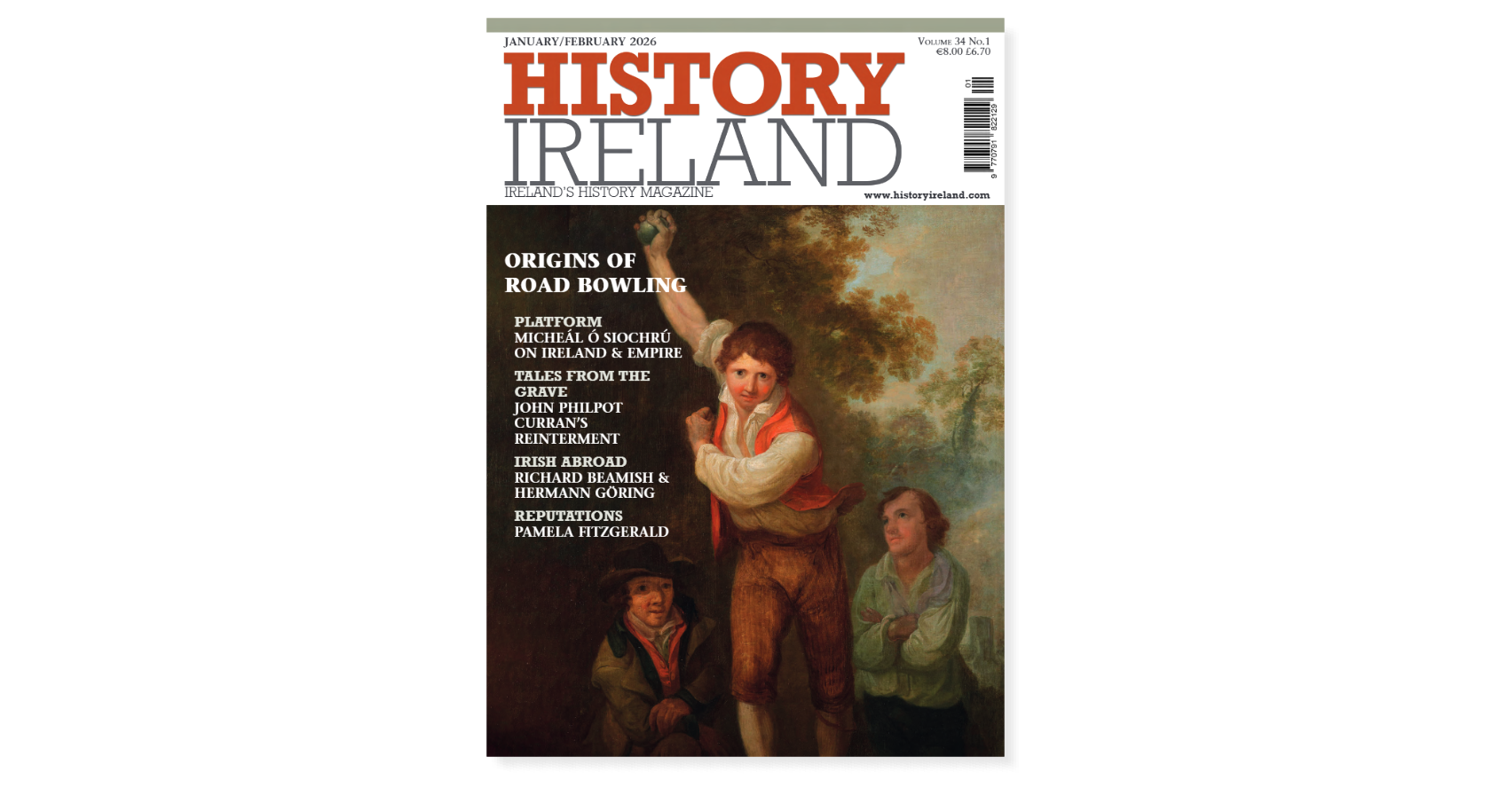
FEBRUARY 2026: Article by Professor Micheál Ó Siochrú IN HISTORY IRELAND
Down Survey relaunch
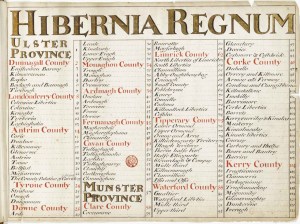
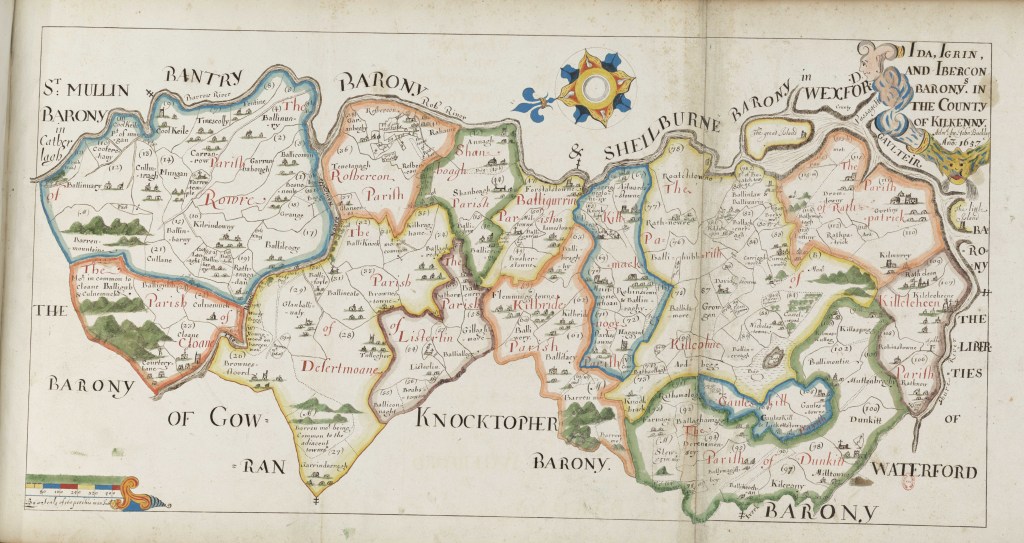
February 2026 witnessed the relaunch the award-winning Down Survey website at https://www.downsurvey.ie/. This completely revised and redesigned site includes the restored and newly digitised images of the barony maps held in the Bibliothèque Nationale de France, as well as the complete set of the images of the Books of Survey and Distribution held in the National Archives in Dublin. We are grateful for the invaluable support from the BnF and from the Irish Manuscripts Commission. Custodian and the Adapt centre in TCD (Ivan Bacher in particular) led the technical aspects of the redevelopment.
Taken in the years 1656-1658, under the direction of Sir William Petty, the Down Survey of Ireland is the first ever detailed land survey on a national scale anywhere in the world. These maps and lists of landowners proved vital in enabling the English to fully exploit Irish land and resources in the interests of the developing Atlantic Empire. This site has brought together, for the first time in over 300 years, all the surviving materials, and made them available as a public online resource.
Project Team: Micheál Ó Siochrú and David Brown
Funding: Funding for the second phase of the project, to incorporate the Books and Survey and Distribution with the Down Survey material was generously provided by the Irish Manuscripts Commission.
Partners: Custodian designed the new website, while The Adapt centre in TCD, and Ivan Bacher in particular, provided the required technical expertise.
AI, Archives, and the Future of Historical Research
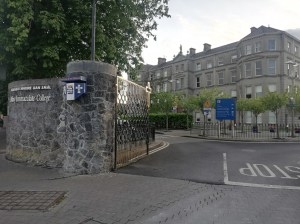
On 12 February 2026, David Brown gave a talk at Mary Immaculate College in Limerick on what artificial intelligence might mean for historians. Much of the public debate around AI focuses on dramatic claims: machines that can write essays, code software, or carry out research at astonishing speed. For historians, the reality is more complicated.
The real promise comes when AI is used to engage with trusted sources. Tools such as Transkribus can help transcribe handwritten or early printed documents, while large language models can assist with proofreading, translation, abbreviation expansion, and the extraction of names, places, dates, and themes. This can turn difficult archival material into searchable, usable text at a scale that was previously impossible.
AI will not replace historical judgement. It can speed up the labour of research, but historians still decide what matters, what is plausible, and what the evidence means. The future is not automated history, but augmented history.